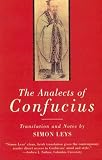
Product Description
In this terse, brilliant translation, Simon Leys restores the human dimension to Confucius. He emerges a full-blooded character with a passion for politics and a devotion to the ideals of a civilization he saw in decline. Leyss Notes draw Confucius into conversation with the great thinkers of the Western tradition. In all, this volume provides new readers the perfect introduction to a classic work.
Rate Points :3.0
Binding :Paperback
Label :W. W. Norton & Company
Manufacturer :W. W. Norton & Company
ProductGroup :Book
Studio :W. W. Norton & Company
Publisher :W. W. Norton & Company
EAN :9780393316995
Price :$14.95USD
Lowest Price :$8.00USD
Customer ReviewsIm not a Confucius nor a China expert, but ...
Rating Point :4 Helpful Point :7
I enjoyed this book quite a bit. Granted, I havent read other translations of the Analects, so my rating is for the book itself more than as a comparison to other translations.
The fact that Confucius lived thousands of years ago is amazing to me ... the things he says apply to people throughout the ages, and theyre full of wisdom. Having read the book, I find myself trying to be a bit more of a Confucian gentleman than I did before reading it. Confucius teachings about humanity and being a gentleman span across the ages.
Im very glad I read this book. The only reason I didnt give the book 5 stars is because I cant compare it to other translations, and it seems a little improper to rate a translated book without comparing it to other translations. But I personally found Leys lines to be easily understandable and interesting, even if I have no way of ascertaining their accuracy with the original text.
Rating Point :5 Helpful Point :2
Those who complain about this translation being "uninspired" are missing the forest for the trees. Leys rendition of the Analects is a modern, useful, and enjoyable read. The translation flows well and makes sense, and the authors comments are interesting and avoid being scholarly tripe.
Confucius himself would agree that the purpose of his teaching was not to inspire linguistic debate, but to lead the recipient to right action. This book does the latter and avoids the former, and thereby gets my unqualified recommendation. No matter your religious leanings, if you read this book and put it into practice, youll grow into a more human person. As this was the Masters entire point, Id say this translation is a success.
Turned off by translators comments
Rating Point :1 Helpful Point :1
I cant read Confucius in the original so I really cant speak to the accuracy of Simon Leys translation (or should we use his actual name - Pierre Ryckmans?). But without a doubt he feels it is the standard against which all others should be measured, as he constantly passes judgment in his Notes section on all who have gone before and finds each generally lacking in some way. Add to that his efforts to impress the reader with the breadth of his literary knowledge and his decidedly conservative social comments (another reviewer also commented on his anti-gay bias) and Im left with a translation I would just as soon skip.
Servant Leadership Chinese Style!
Rating Point :4 Helpful Point :6
The importance of the historical use and misuse of the teaching of Confucius throughout the centuries in China can hardly be understated. While Confucian thought was on the outs with Communist intellectuals, others such as Lee Kwan Yew of Singapore point to Confucius principles as the secret to the Asian economic tigers success. Leys, the translator of this volume, notes that Chinese familiarity and historical misuse of Confucius prejudices many, but taken without these prejudices, Confucius is thoroughly modern in his application today.
Confucius is known for being a great teacher, but it was politics and government that was his passion. Today, Confucius is a good source for leadership philosophy. Far from promoting authoritarian despotism, the teachings of Confucius point to a higher calling of leadership through service, character development, and self-abandonment - all sorely lacking in Chinese leadership today.
To learn was Confucius calling. He said he did not have much innate knowledge and studied literature and history to learn (6.27). The responsibility of learning was on the learner not the teacher: "I enlighten only the enthusiastic I guide only the fervent. After I have lifted up one corner of a question, if the student cannot discover the other three, I do not repeat" (7.8). While that may sound harsh, Confucius practiced what he preached. "Put me in the company of any two people at random-they will invariably have something to teach me. I can take their qualities as a model and their defects as a warning" (7.22).
Learning was to be put into practice this showed integrity. The first verse of the Analects says, "To learn something new and then to put it into practice at the right time: is this not a joy?" (1.1). Again, "Learning is like a chase in which, as you fail to catch up, you fear to lose what you have already gained" (8.17). Here we see the high value of action resulting from learning and not only study. He valued doing what you say. "There was a time when I used to listen to what people said and trusted that they would act accordingly, but now I listen to what they say and watch what they do" (5.10). Doing what you say is the heart of personal integrity. "A gentleman would be ashamed should his deeds not match his words" (14.27).
Learning was his way of improving himself in order to govern well. Three major themes surface in Confucius teaching regarding those who govern: be a gentleman, keep the rites and maintain your humanity. A gentleman was a moral superior, someone worthy of leading. A person becomes a gentleman not through birthright but through learning and right actions. These actions are called ritual, which is similar to courteous behavior, and maintaining humanity which is treating people with respect, dignity, fairness, justice and generosity to name a few of the qualities that Confucius praises. Ritual and humanity develop character in a person, and a person with character is the one whom Confucius calls a gentleman.
Confucius and his contemporary political and intellectual leaders wanted to make a name for themselves. In a way, they could live on through that reputation. "The Master said: A gentleman worries lest he might disappear from this world without having made a name for himself" (15.20). However, in making a name a leader must not do evil or act without virtue.
Official position was an obvious choice for ruling and making a name. Today, position is the most highly regarded form of authority all over Asia. Hear Confucius: "Do not worry if you are without a position worry lest you do not deserve a position" (4.14). Again, "It is not your obscurity that should distress you, but your incompetence" (14.30). This is a powerful lesson for Chinese leaders to hear. Today too much emphasis is placed on leadership position, and not enough placed on competence and character. The results are personal empires, corruption, and incompetence that oppress those without power (position). "Before he gets his position, his only fear is that he might not get it, and once he gets it, his only fear is that he might lose it. And when he fears to lose it, he becomes capable of anything" (17.15).
The wisdom available to contemporary readers goes on and on. I found this book extremely helpful for finding ancient Chinese cultural leadership principles that back up the principles of transformational leadership theory and servant leadership theory. I would like to read and reflect deeper to find Confucian principles that are not yet apart of contemporary models of leadership, but are consistent with it. This is a deeper task.
Recently I have begun quoting Confucius during my leadership seminars. Although, a feel a bit dubious doing so - proof texting largely Western leadership principles with Confucius - the reaction from the participants has been enthusiastic. While many leaders are attracted to Western leadership theories, many also feel these theories are foreign. Many theories based on egalitarian social structure are foreign and are not appropriate for most cultures in Asia. However, some theories, working inside hierarchical social structures, are helpful but still smack of American "one, two, three" optimism. We are sometimes too brash and not mysterious enough, too left brained, in our presentations. Confucius has helped my audiences to embrace the principles I try to get across.
I was surprised how readable, useful and contemporary the writing of Confucius is to me as a leadership consultant. He had a good grasp of humankind, and set the bar very high regarding how leaders should govern from character and justice. He encouraged people to higher traits of humanity, that if followed would make the world a much better place. We would do well to study and apply the teachings of Confucius.
Completely unprofessional translation
Rating Point :1 Helpful Point :3
One of only two things Ive ever went to the trouble to return to Amazon.com. I bought this translation because it was recommended in "Confucius Lives Next Door". Unfortunately, Mr. "Leys" goes out of his way to be homophobic in his footnotes. Ive heard a lot of adjectives used to describe minority groups in my lifetime, especially since I live in the Midwest but "grim" is a new one (page 126). I am surprised that such a progressive company such as Amazon sells a book that incites such negativity about a minority group. Can anyone recommend a professional translation?
 The basic writings of Chuang Tzu have been savored by Chinese readers for over two thousand years. And Burton Watsons lucid and beautiful translation has been loved by generations of readers. Chuang Tzu (369?-286? B.C.) was a leading philosopher rep
 The Tang Dynasty (618-907), traditionally regarded as the golden age of China, was a time of patricians and intellectuals, Buddhist monks and Taoist priests, poetry and music, song and dance. In Chinas Golden Age Everyday Life in the Tang Dynasty, Ch
 More populous than any other country on earth, China also occupies a unique place in our modern world for the continuity of its history and culture. In this sumptuously illustrated single-volume history, noted historian Patricia Ebrey traces the ori
 Mencius was the philosopher whose influence upon ancient Chinese thought was second only to that of Confucius, whose teachings Mencius defended and expanded. The Mencius, in which he recounts his dialogues with kings, dukes, and military men, a

 The Tso chuan has long been recognized as a classic of Chinas early prose tradition. Probably written in the third century B.C., the book is a vivid account of events during the crucial period from 722 to 468. The Tso chuan focuses on political, di
 The first comprehensive English-language collection of the writings of this pivotal period in Chinese intellectual history, this volume provides translations of key works, arranged chronologically within topics, and accompanied by substantive headnot
 This new edition offers expanded selections from the works of Kongzi (Confucius), Mengzi (Mencius), Zhuangzi (Chuang Tzu), and Xunzi (Hsun Tzu) two new works, the dialogues Robber Zhi and White Horse a concise general introduction brief introductions
 Bryan Van Nordens new translation of the Mengzi (Mencius) is accurate, philosophically nuanced, and fluent. Accompanied by selected passages from the classic commentary of Zhu Xi - one of the most influential and insightful interpreters of Confuciani
 Compiling in one volume the basic writings of these three seminal thinkers of ancient China, each from a different philosophical school, this book reveals the richness and diversity of the ancient Chinese intellectual world.
 Album DescriptionLimited 2008 UK 180gm vinyl pressing of this classic album, released to coincide with the 60th anniversary of the long-playing record. This is an exact replica of the original packaging and contains a voucher enabling the purchaser t
 Album DescriptionJapanese only SHM-CD (Super High Material CD - playable on all CD players) pressing. Universal. 2008.Amazon.com essential recordingThe essential New York rock band of the post-punk era, Sonic Youth care as much about the quasi-sympho
 Album Description1998 Japanese reissue on Geffen of their 1992 album with Stalker added as a hidden bonus track. 16 tracks total, also featuring the singles 100%, Youth Against Fascism and Sugar Kane.Amazon.comA must-buy for any teen or twentysomethi
 Amazon.com essential recordingBad Moon Rising is an album of inspired contradictions. Chilling yet pastoral, artful yet politicized, it documents a band at odds with its own impulses and the culture that spawned them. You can hear Sonic Youth struggl
 Amazon.com essential recordingHaving successfully balanced atonal freak-outs with rock song structure on their previous release, EVOL, Sonic Youth went further towards convention with this concise, "all rock" (their words) album. Recorded on old tube
 Amazon.com essential recordingNew York Citys Lower East Side has always attracted bohemian freaks looking to shock the world, but with EVOL (Love spelled backwards)--their third album after a live tape and several EPs--Sonic Youth finally figured a w
 Amazon.comAs Sonic Youth will testify, its not easy being avant-rock superstars. Follow your urge to experiment, and you risk alienating your more conservative fans. Stop experimenting, and you lose the impetus that made you so exciting in the first
 Amazon.comThis extraordinarily powerful 1983 production may be the best-sung performance by Luciano Pavarotti on DVD, but when acting values are counted in, Ingvar Wixell manages to outshine the tenor star. Verdi gave the Duke two of Italian opera
 Amazon.comOpera is an inherently theatrical medium that does not lend itself readily to the realism of film treatment. The shining exception is Puccinis Tosca, an action-packed melodrama that unfolds in three taut and gripping acts like the meatiest
 Amazon.comThis DVD version of Donizettis comic opera zooms right to the top of any list of essential videos for opera fans. It may not be the composers best work, but given a top-notch production with world class singing actors, it brings vocal thril
 DescriptionRossini was 24 years old when in 1816 he wrote his seventeenth opera and most renowned "buffa", The Barber of Seville, in barely three weeks. The accompanying recording is from the 1988 Schwetzinger Festspiele. The production by Michael Ha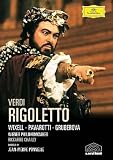

 The Upanishads, the earliest of which were composed in Sanskrit between 800 and 400 bce by sages and poets, form part of the Vedas - the sacred and ancient scriptures that are the basis of the Hindu religion. Each Upanishad, or lesson, takes up a the
 The eighteen chapters of The Bhagavad Gita (c. 500 b.c.), the glory of Sanskrit literature, encompass the whole spiritual struggle of a human soul. Its three central themes-love, light, and life-arise from the symphonic vision of God in all things an
 "The Dhammapada" is a collection of aphorisms that illustrate the moral teachings of Buddha - the spiritual path to the supreme Truth. Probably compiled in the third century BCE, the verses are arranged according to theme, covering ideas such as self
 Printed throughout in two colors is this new, definitive version of one of the great books of world literature--comparable in its sales and influence to the Bible, the Bhagavad Ghita, and the Koran.